Experience Design · Embodied Interaction · Physical Computing
Not Made to Fit
A study of eating disorders, embodiment and self-perception, proposing embodied interaction as a tool for reflection and empathy
Type
Individual
Bachelor’s Thesis
My role
Researcher &
Interaction Designer
Period
6 months
Year
2026
Mentors
Dr. Joëlle Bitton · Verena Ziegler
Not Made to Fit is an embodied interactive escape room that explores eating disorders as psychological experiences shaped by social expectations.
Through physical interaction, participants deepen self-awareness and build empathy by reconnecting bodily sensations with emotional experiences.
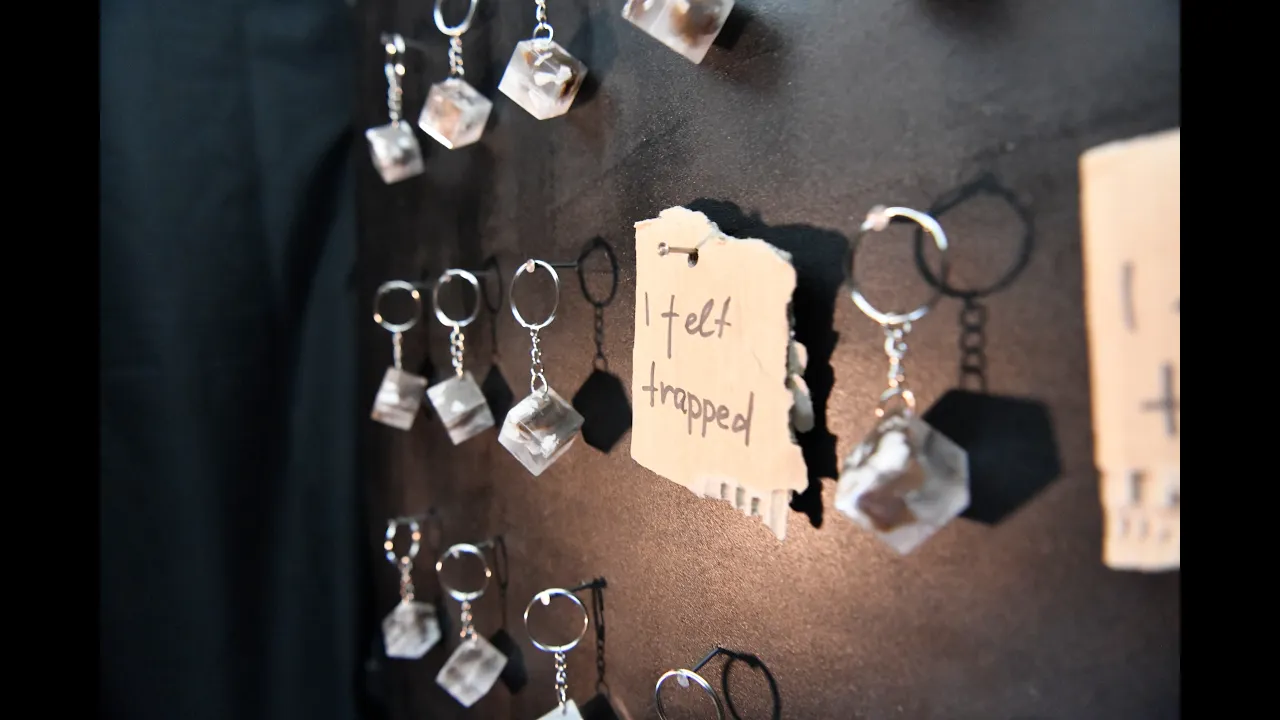
·
Research
Look on the topic of eating disorders not on the surface level of a behavior problem, but through research and personal interviews address the real issue and bring more awareness to it
·
Installation
Create an interactive experience that can help people not only understand the topic of eating disorders better, but also let them feel and experience it in a controlled setting
Background Research
Problem → Solutions
·
Cultural roots of eating disorders
Media-driven ideals link thinness and discipline to self-worth, framing ED as symptoms of broader social pressure to shape the body to fit those norms
−
Existing Solutions
Tracking culture made people rely on numbers rather than senses. Many existing projects for ED follow the same logic: monitoring behavior and providing feedback or instructions to help users improve
+
New approach
Rather than prescribing right or wrong, projects based on embodied interaction create physical experiences that build self-awareness, turning the body itself into a tool for reflection.
Dr. Sc. ETH Peter Krummenacher
Neuroscientist, neuropsychologist, habilitated at the Faculty of Medicine of the University of Zurich
Dr. Sc. ETH Peter Krummenacher
Neuroscientist, neuropsychologist, habilitated at the Faculty of Medicine of the University of Zurich

Survey Results
106 survey & 15 interview participants
Anonymous contributors with lived experience of eating disorders, consulted through the research phase and final testing
Interview Quotes
In their words
“it feels like an addiction, and it feels like… I can’t not do it.”
“you really want to help that person because you care so much about them. But you also feel like you can’t do anything”
“I didn’t realize until the second time I was hospitalized that it was really something … I realized I don’t want to die … this was the first time I tried to do it for myself”
“…my thoughts are just spiraling… it’s very much not a choice”
“I didn’t want to be the girl with the eating disorder… when someone tries to talk… I avoided them”
“I wanted people to recognize that I was not well, but I also didn’t want to talk about it”
“they were just like, oh, she’s feeling sick again”
“you’re so deep in the disorder… it becomes such a part of your identity”
It Was Never About Food
While going through hard life situations, ED becomes a way to deal with these difficulties
This Is a State, Not a Behavior
ED lives in the gap between a “normal” outer self and inner struggle. Over time, these behaviours become automatic
Everything Seemed Normal
This topic is surrounded by a lot of taboos, making it hard for people to open up and ask for help, making them feel very isolated
It's Not Recovery, It's Remission
Even after overcoming the problem, you have to make an effort your whole life to maintain a new way of coping with problems
Research Question
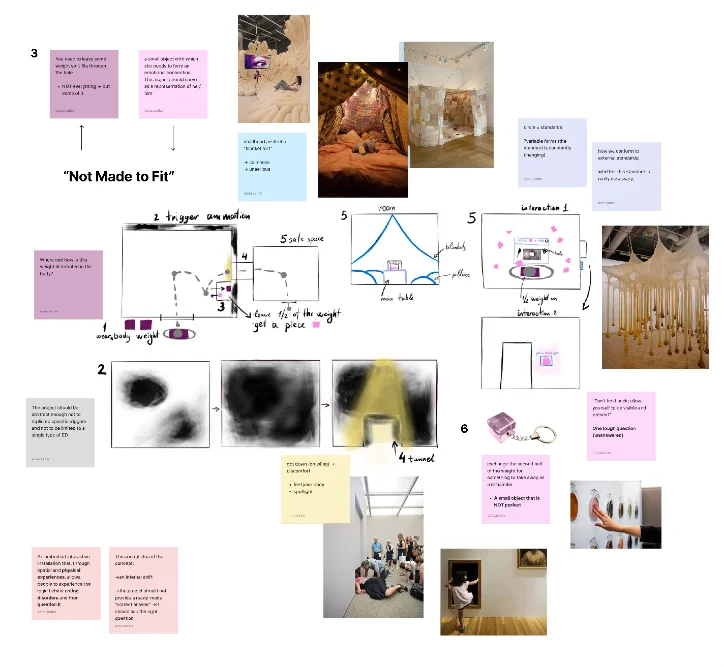
Concept Sketches

Key Metaphor
Design Process
The goal of the first phase was to find a way to use spatial and physical interaction to guide the user into a state of bodily awareness and reflection.


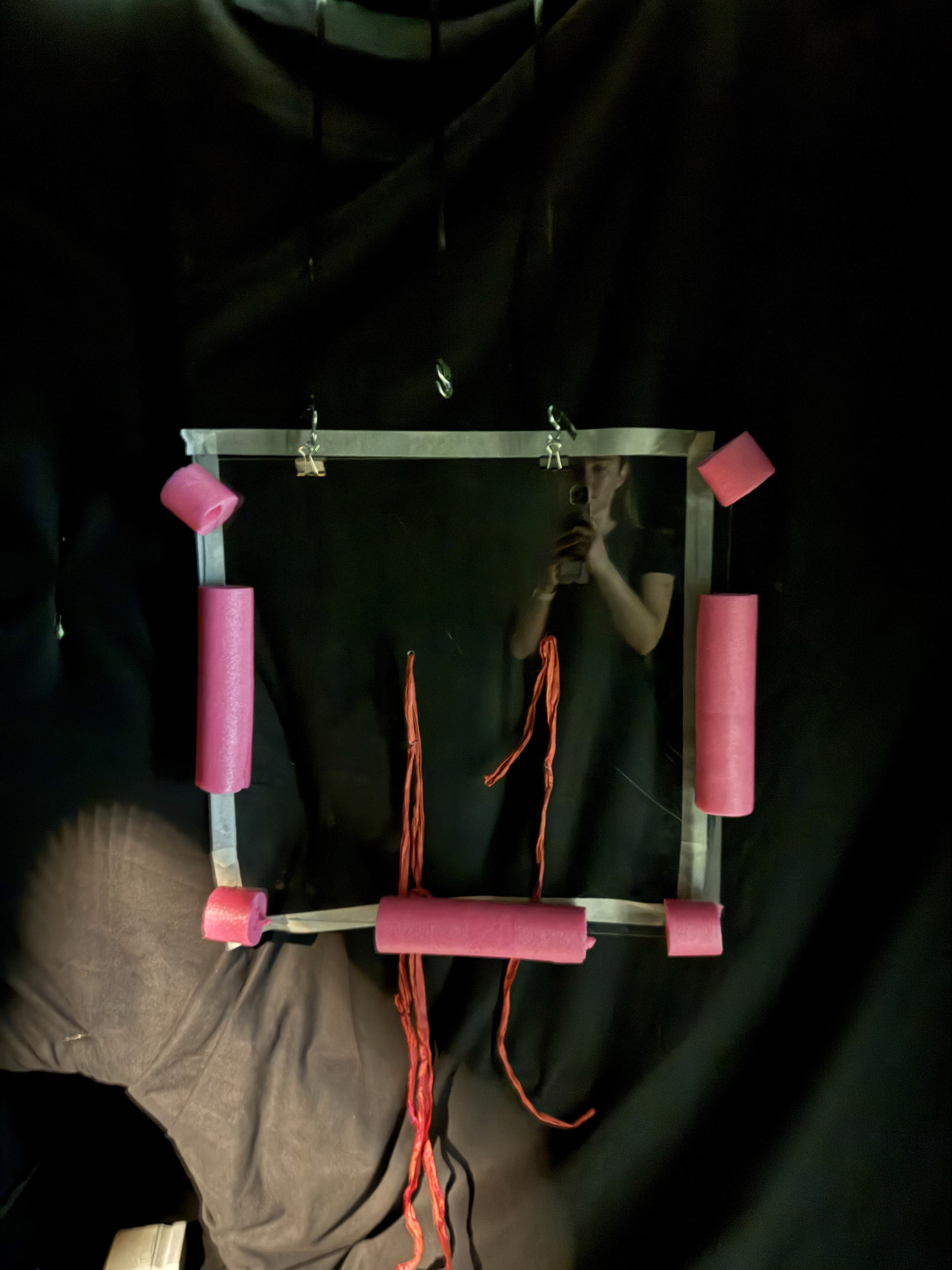
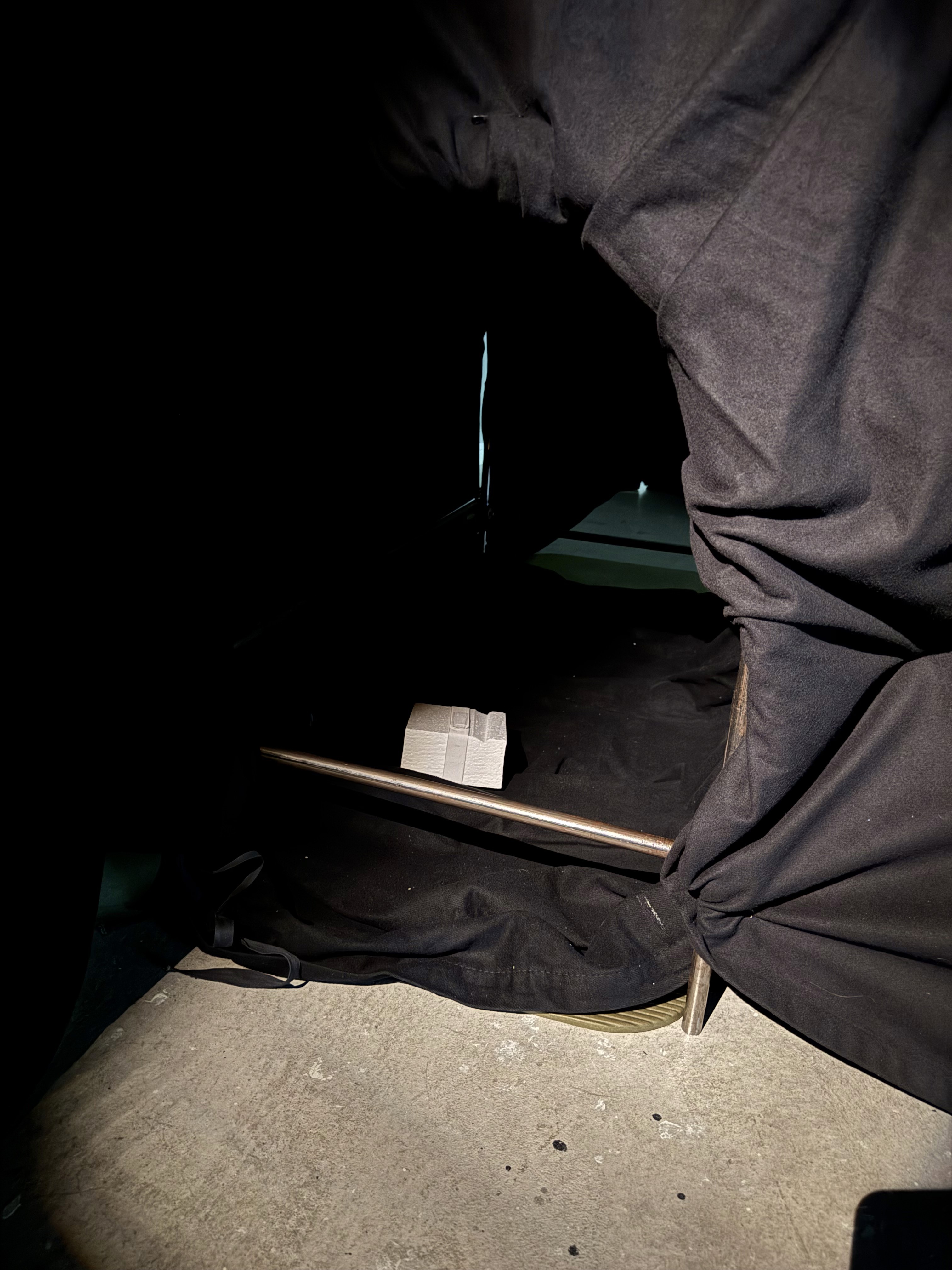

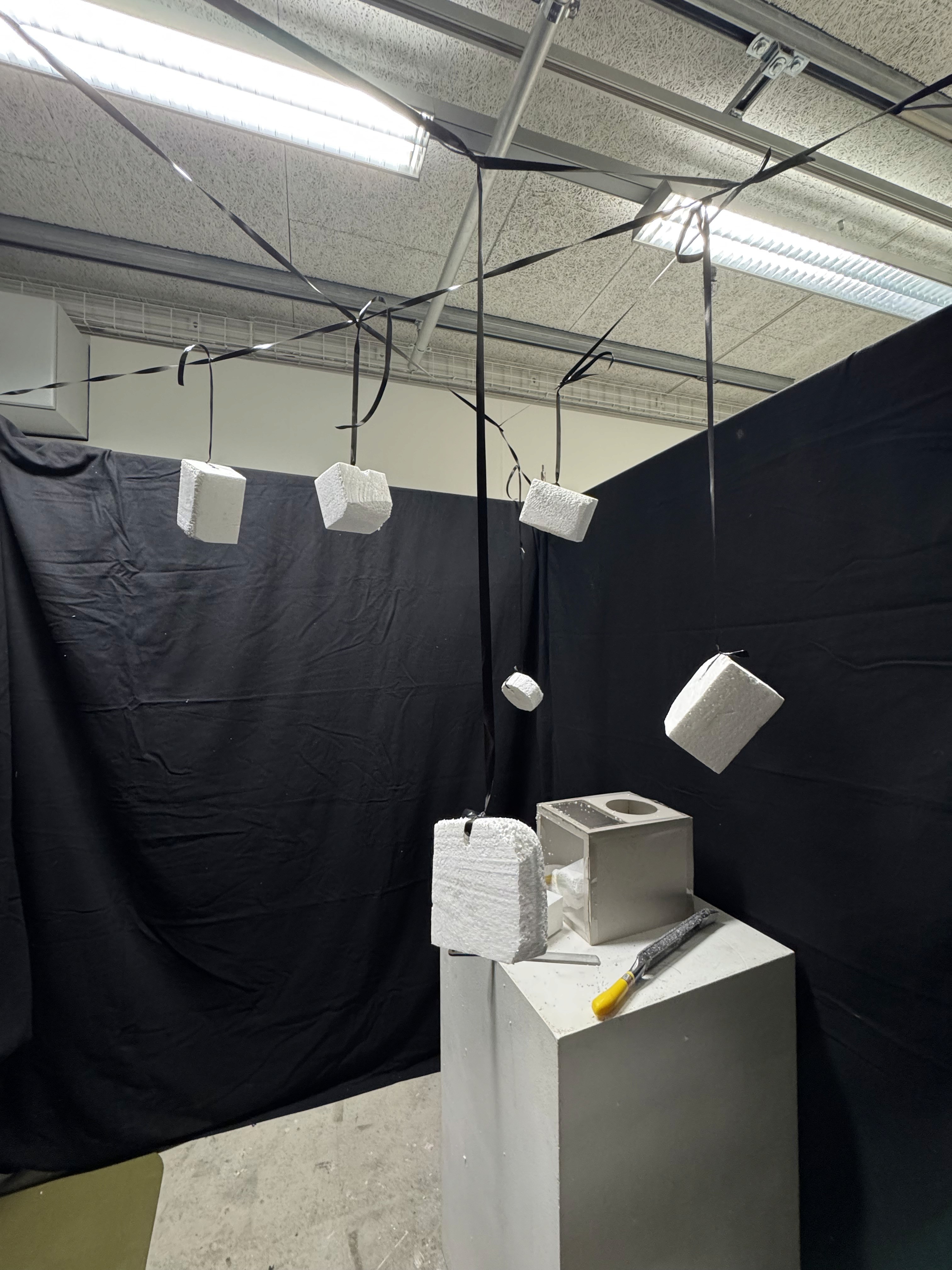
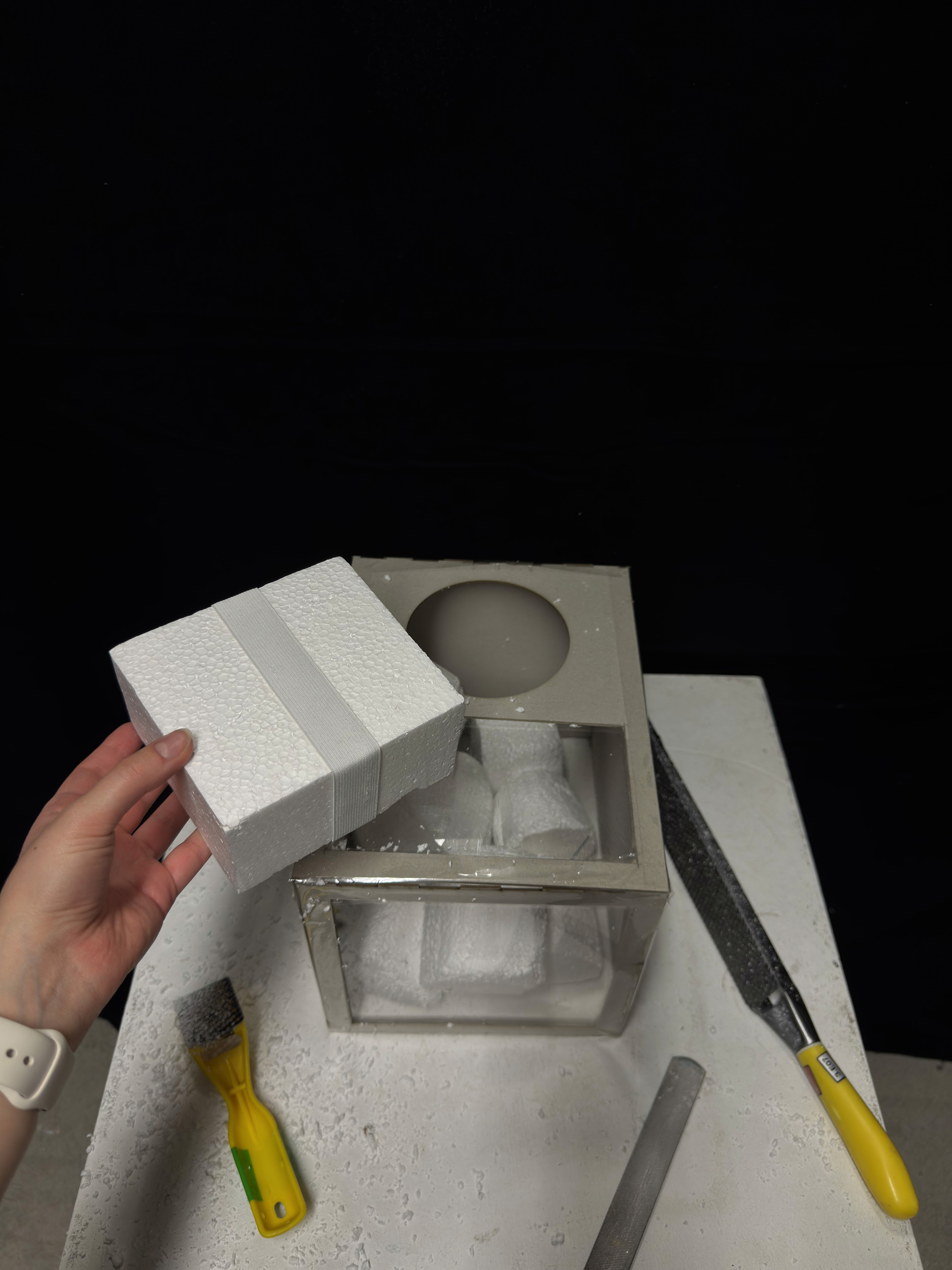

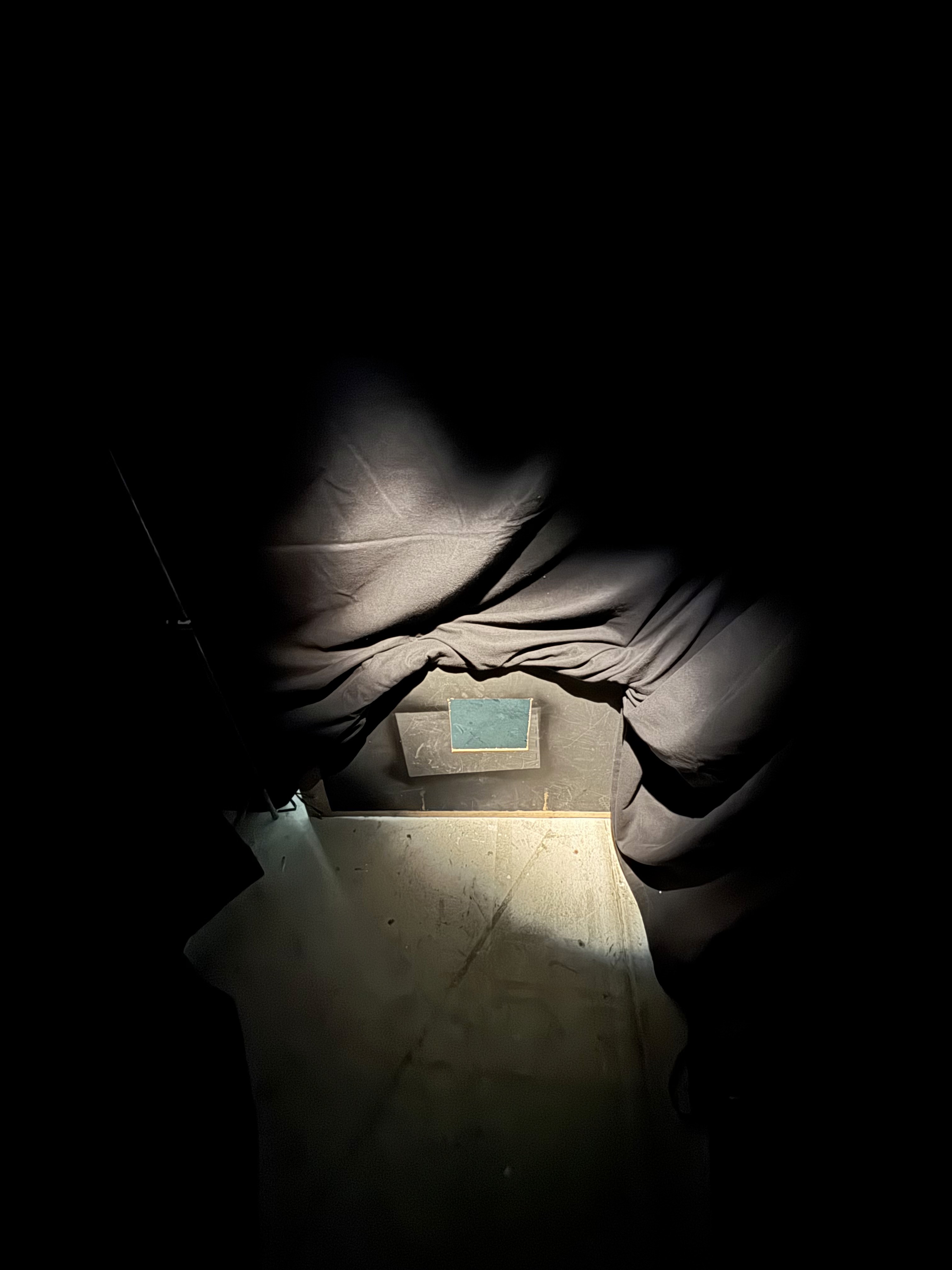


First Prototype

Providing Context
Is more upfront context needed, or does staying abstract let everyone find their own meaning regardless of their connection to ED?

Immersion in Experience
Participants noted that the interaction feels a bit forced and is perceived more as a game
Project Development
User Journey
To address participant feedback, the next phase focused on shaping a user journey where meaning could emerge naturally, rather than feeling instructed or playful
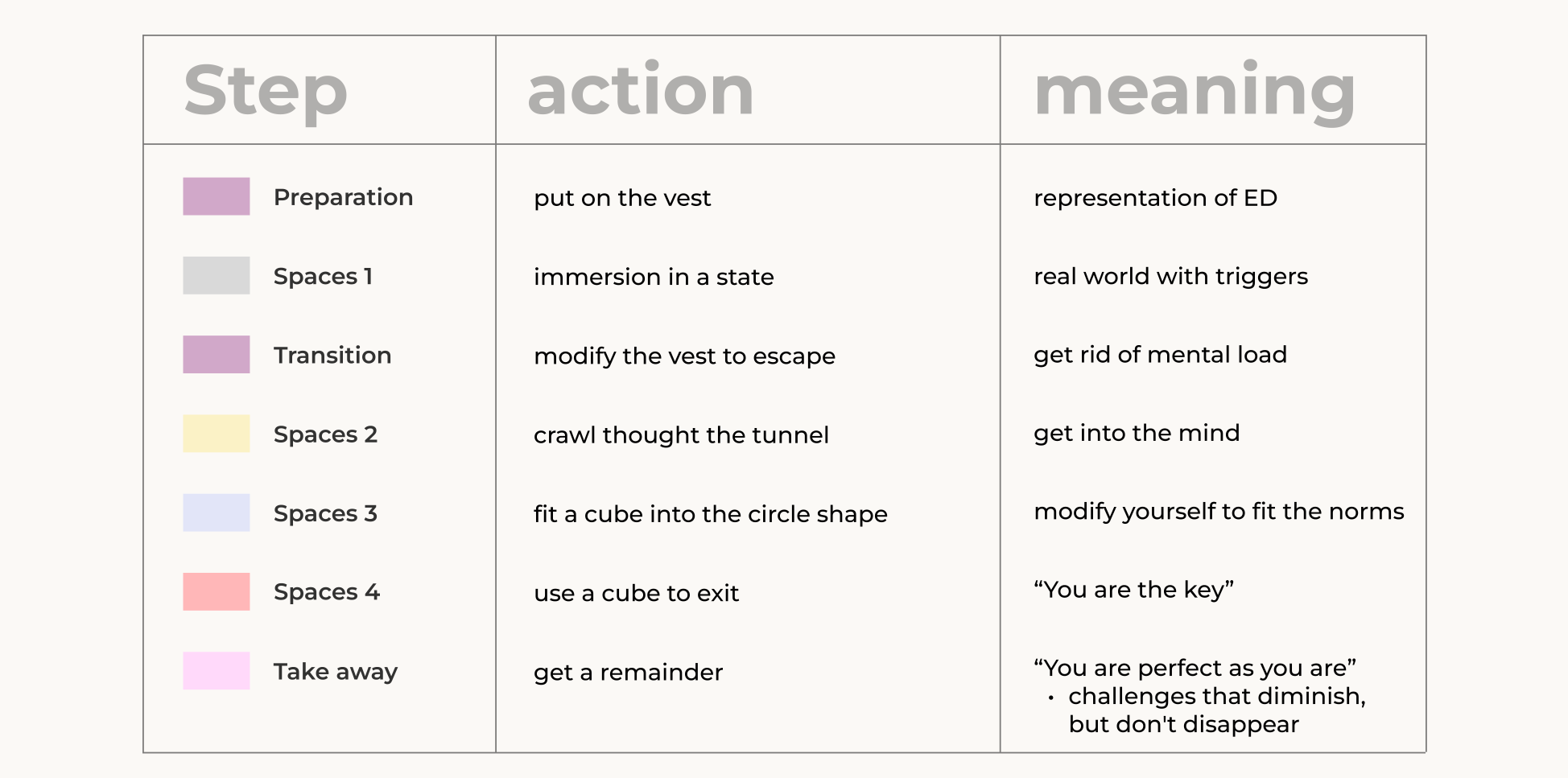

One Space, One Action
Each space embodies a single idea and action, explaining one part of the problem so visitors can fully settle into the mood before it shifts
Autonomous Flow
Sensors track visitor location to automatically trigger lighting, next steps, and exit doors, letting the installation run without manual intervention
Project Evolution
The goal of the next phase was to figure out how to ensure the installation could operate autonomously in an exhibition setting
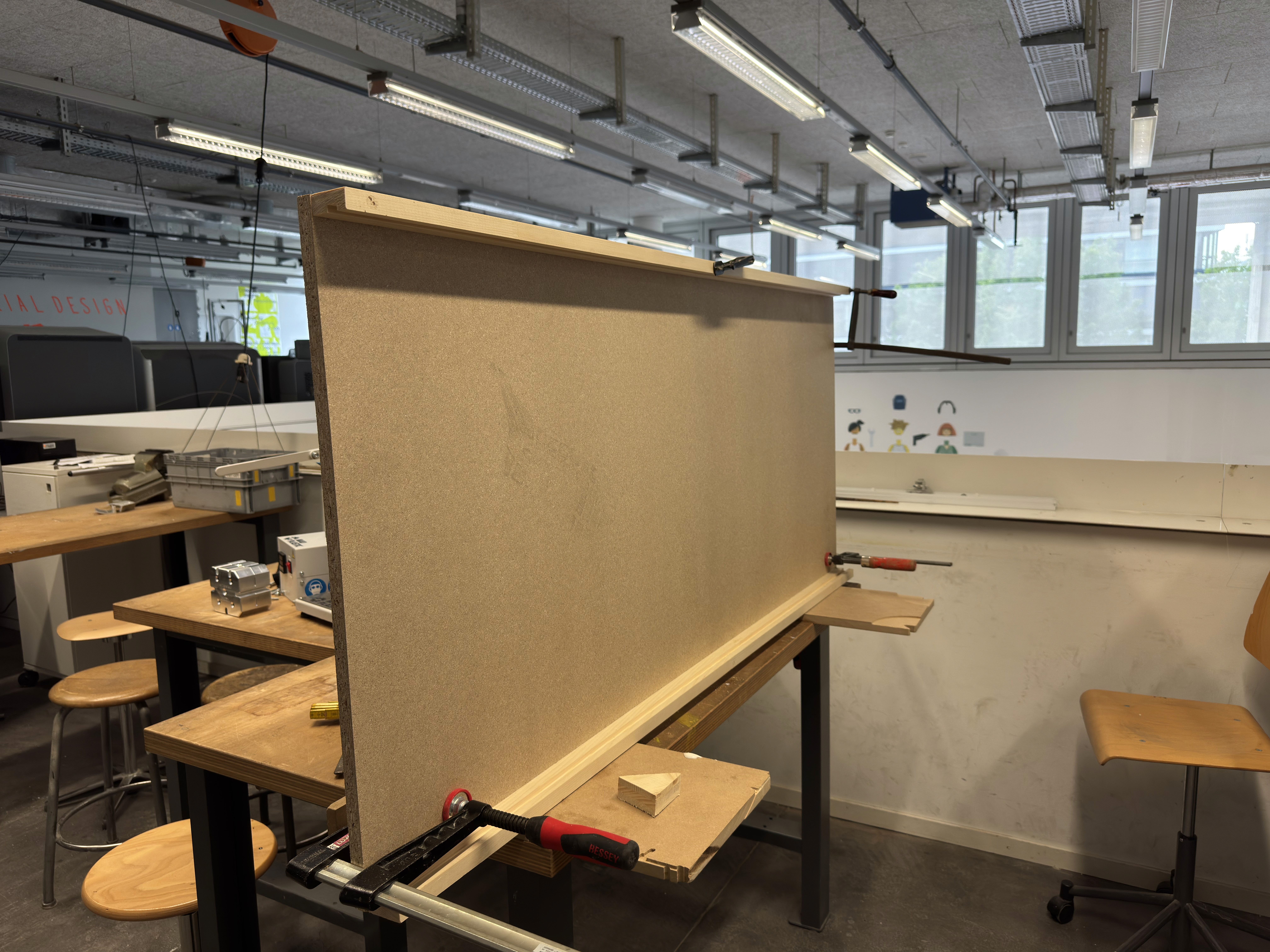
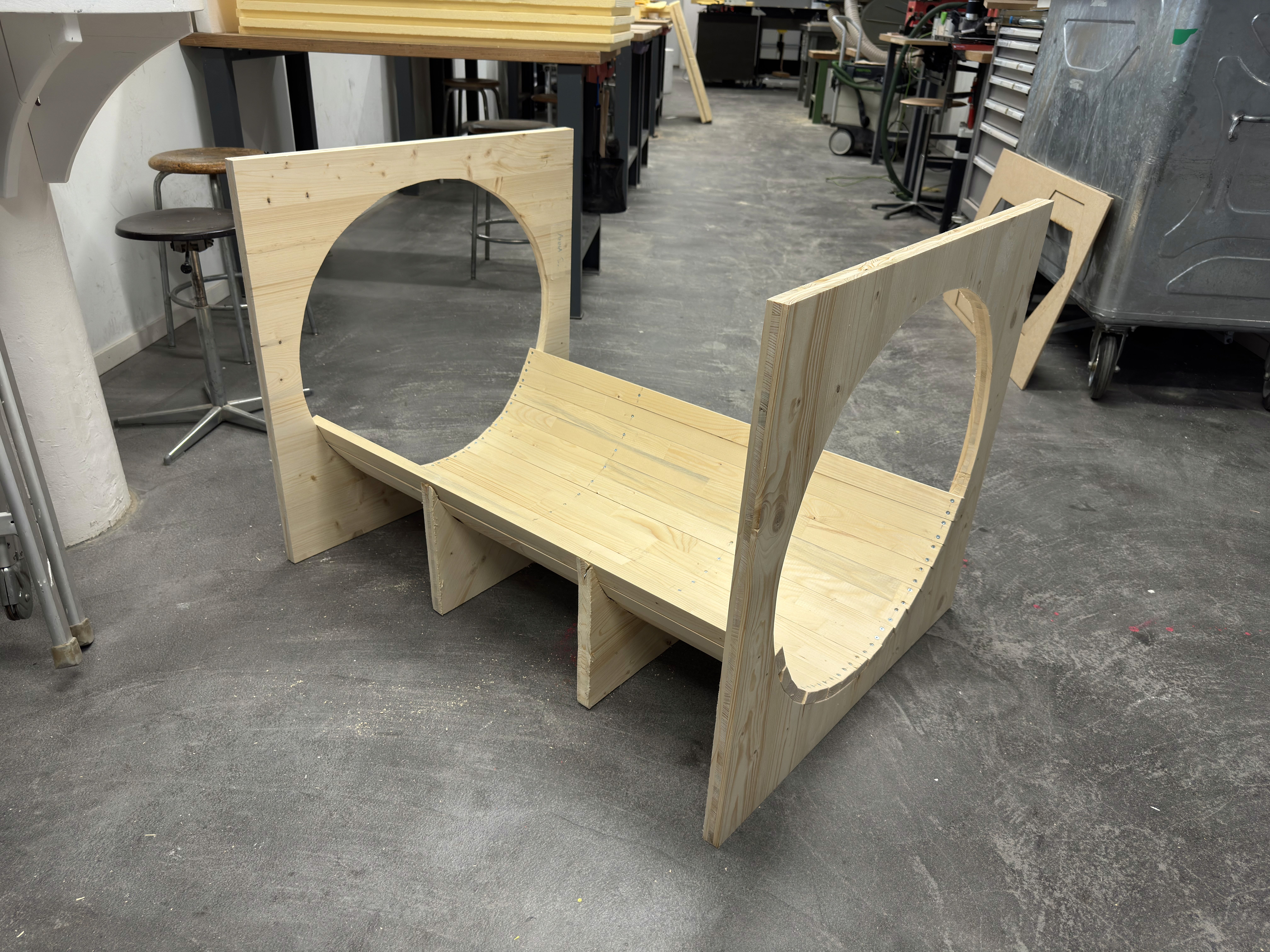


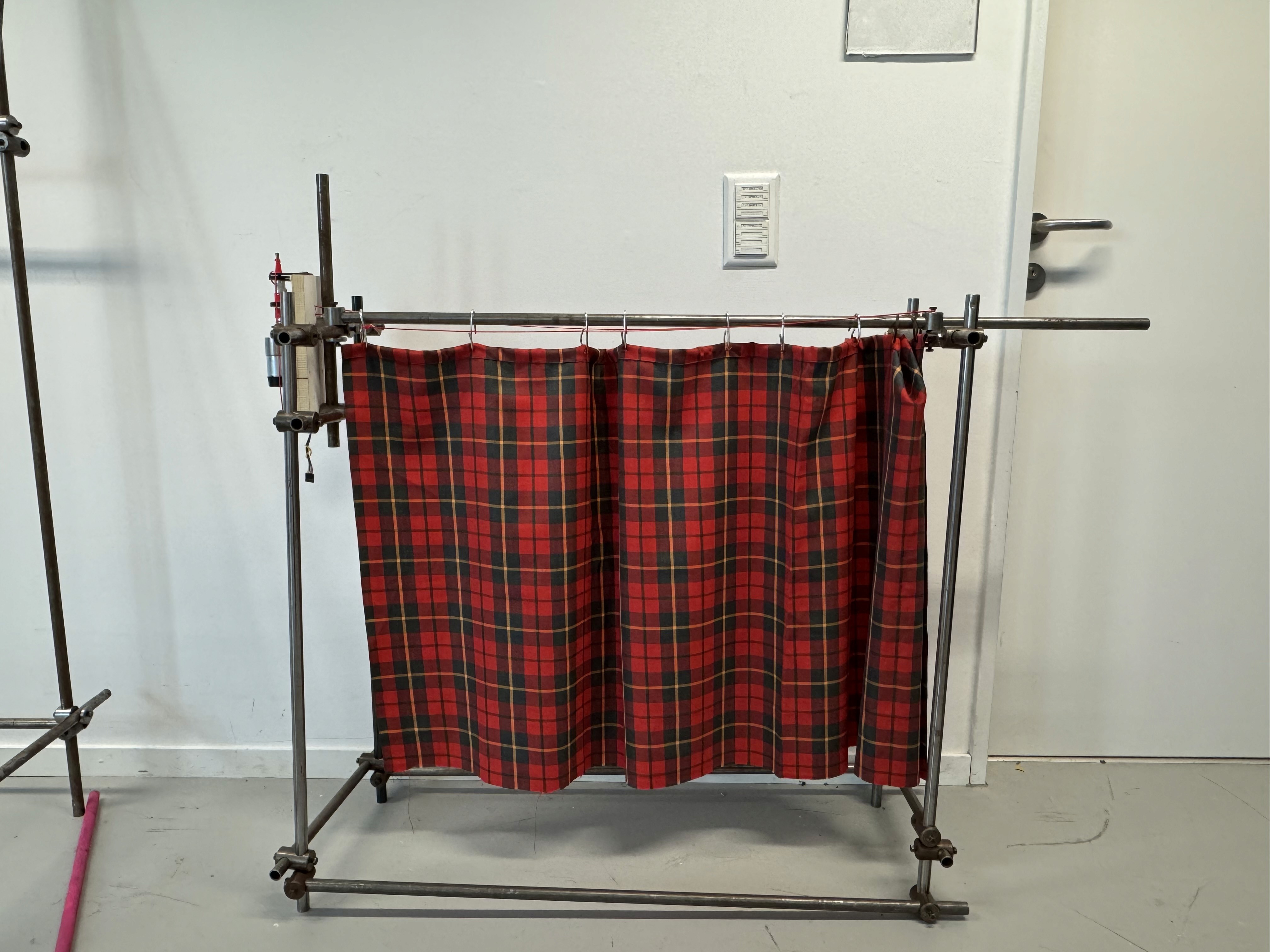
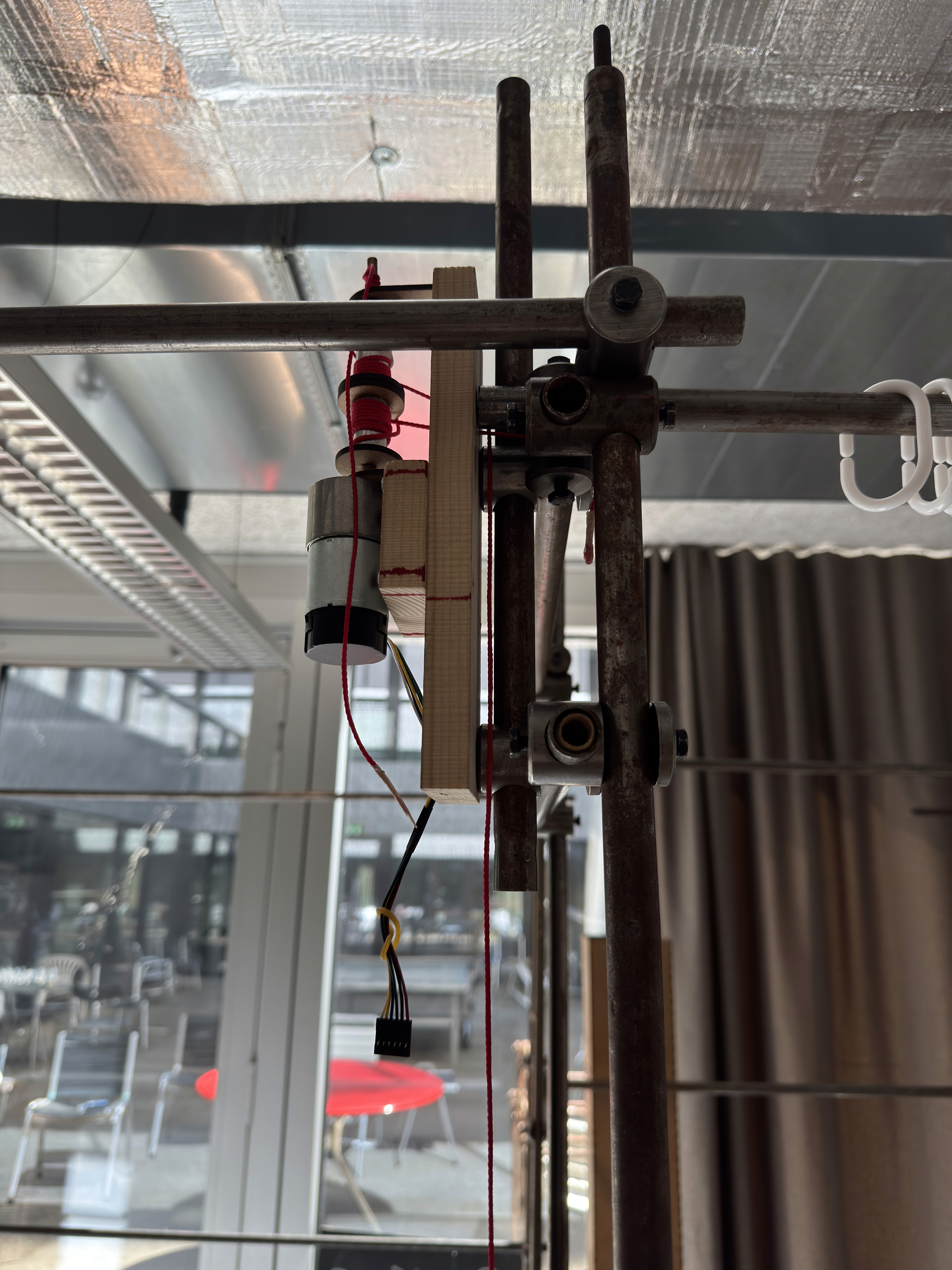
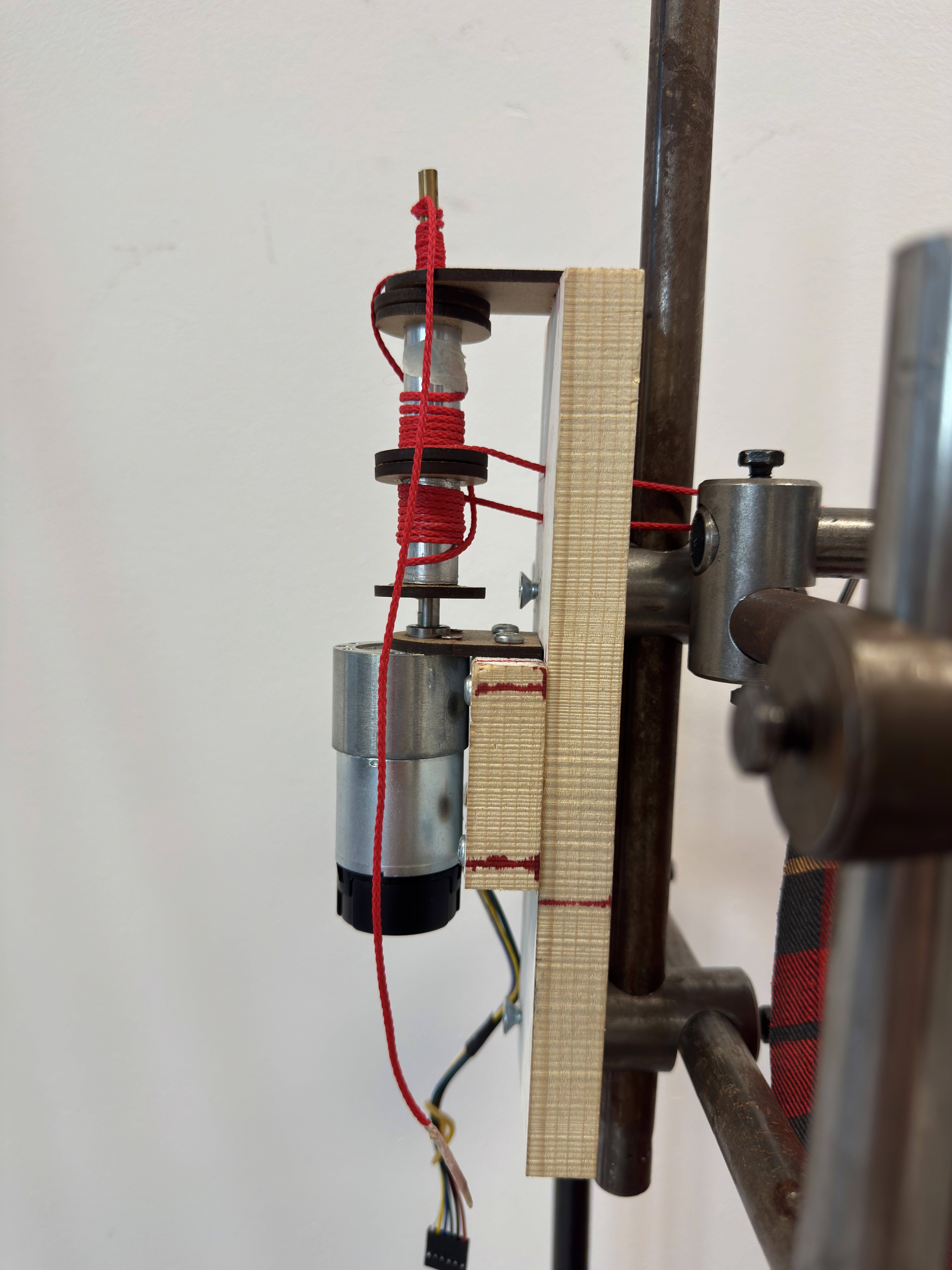


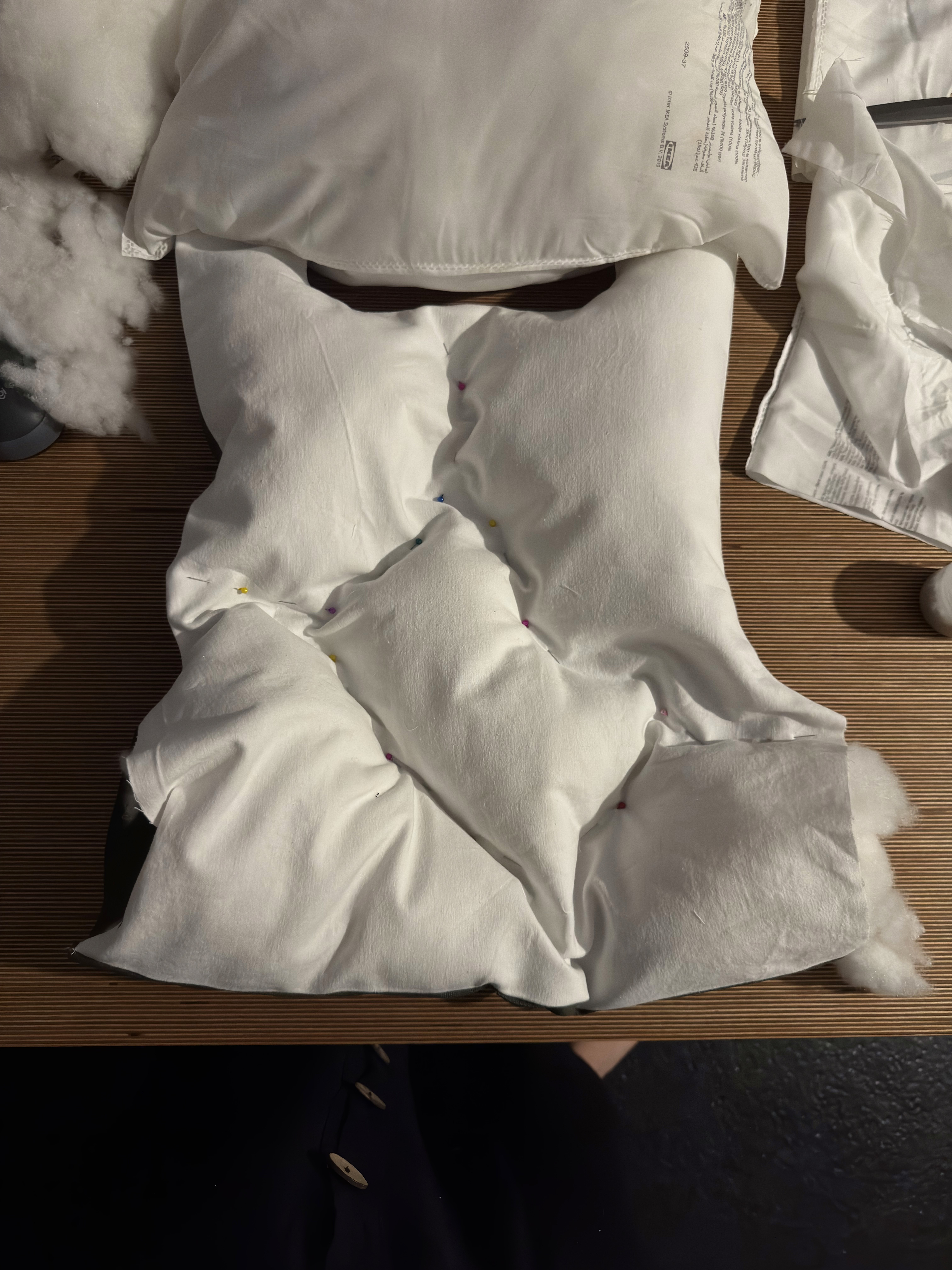
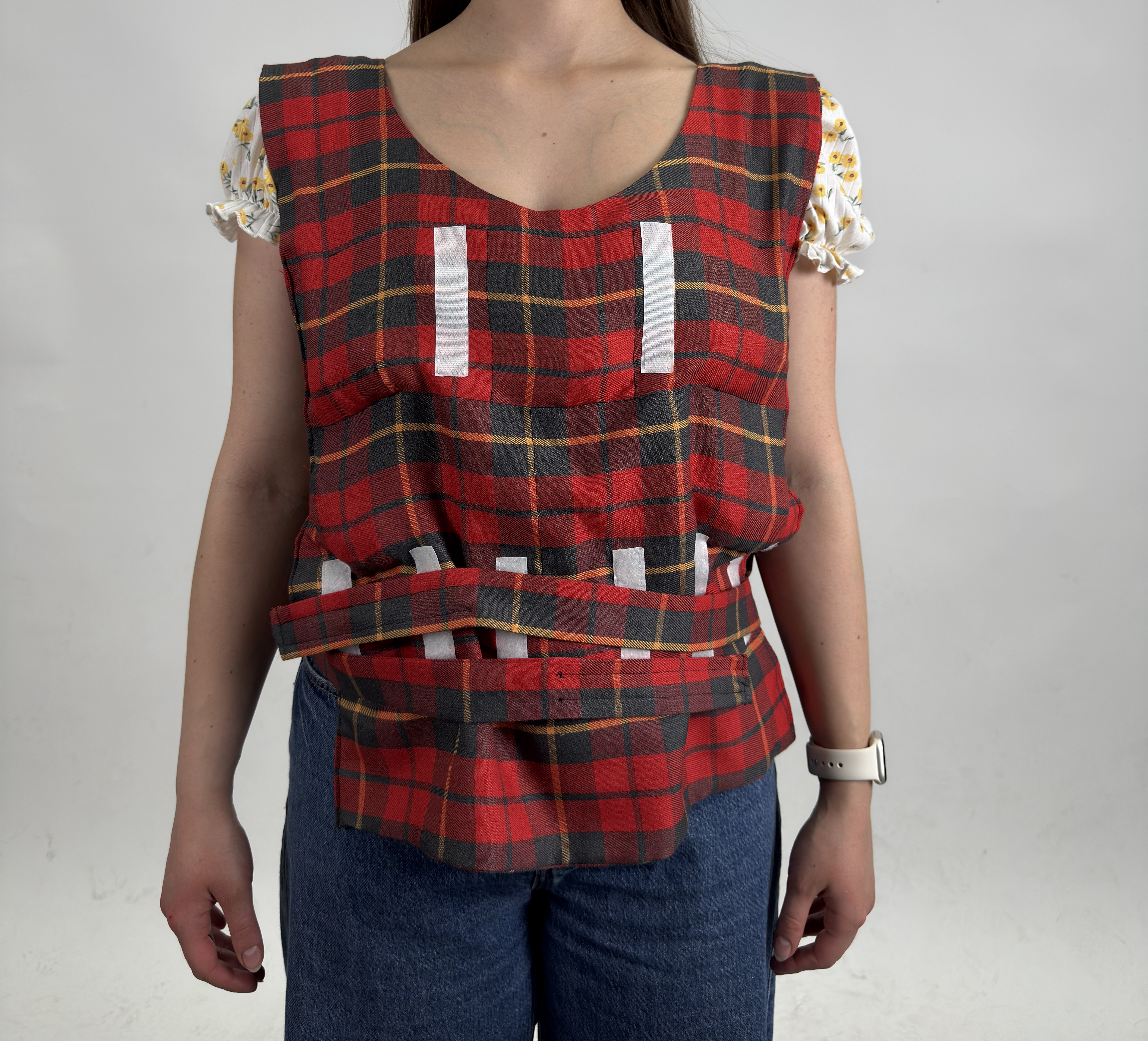

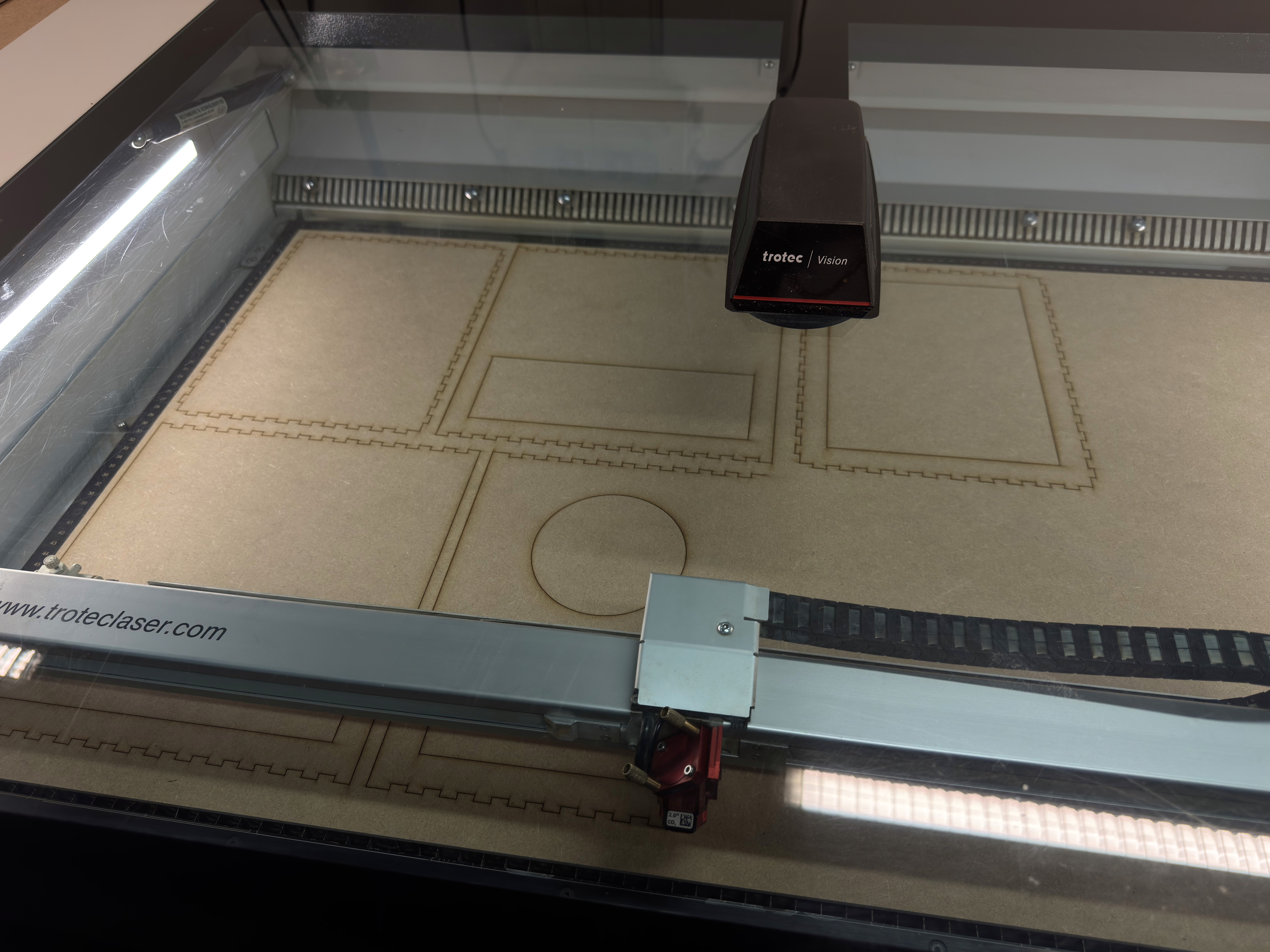
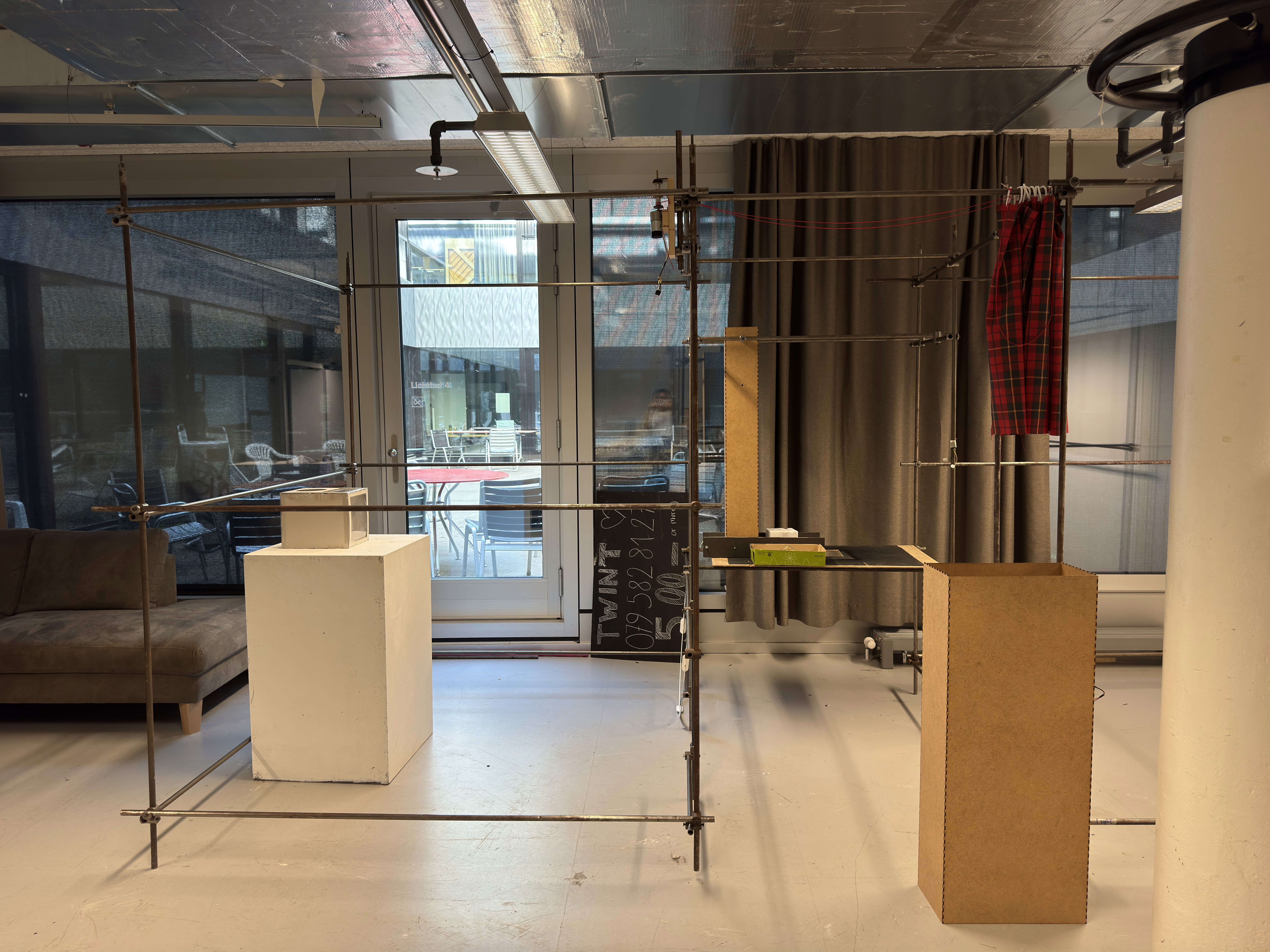
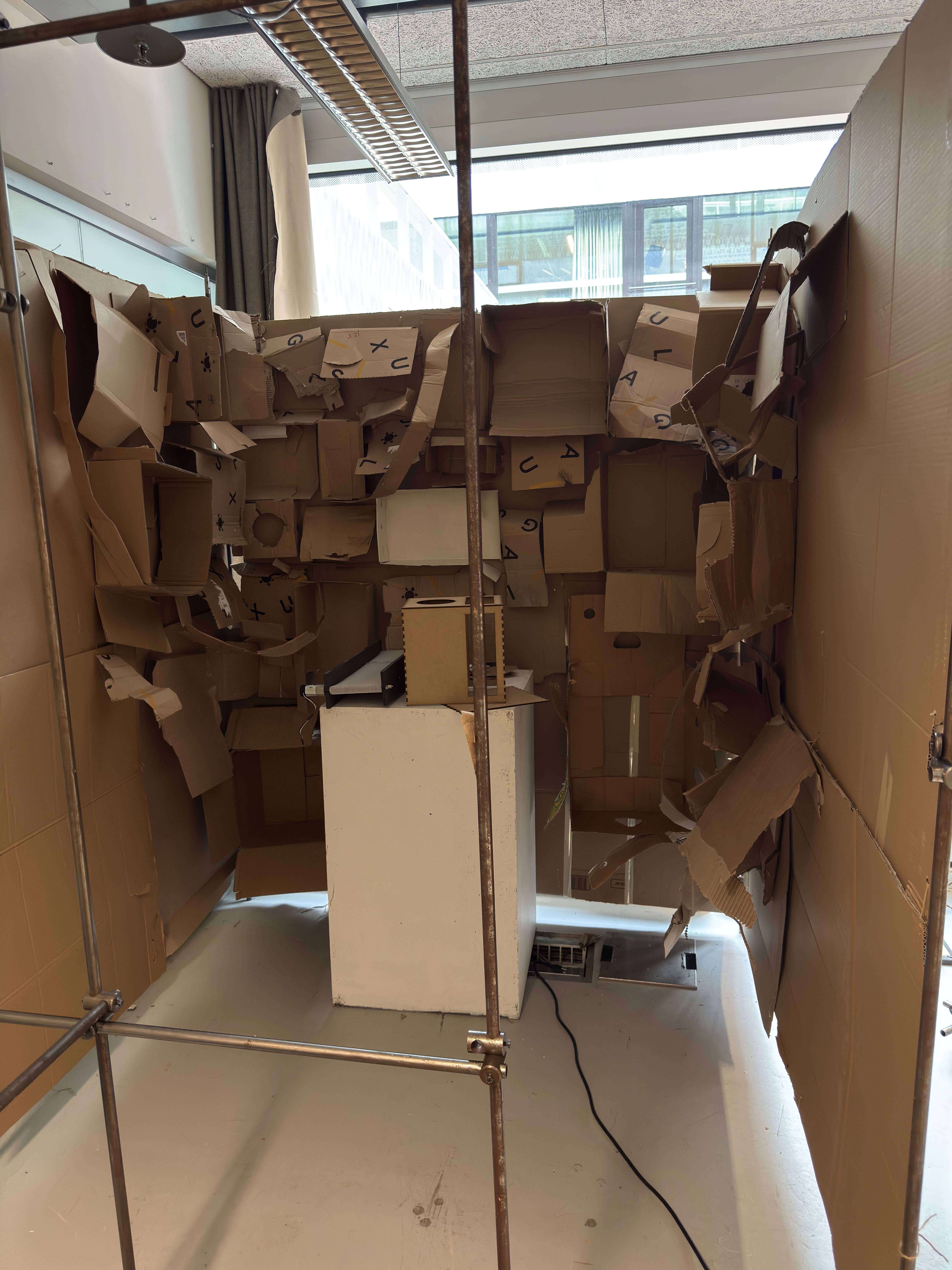

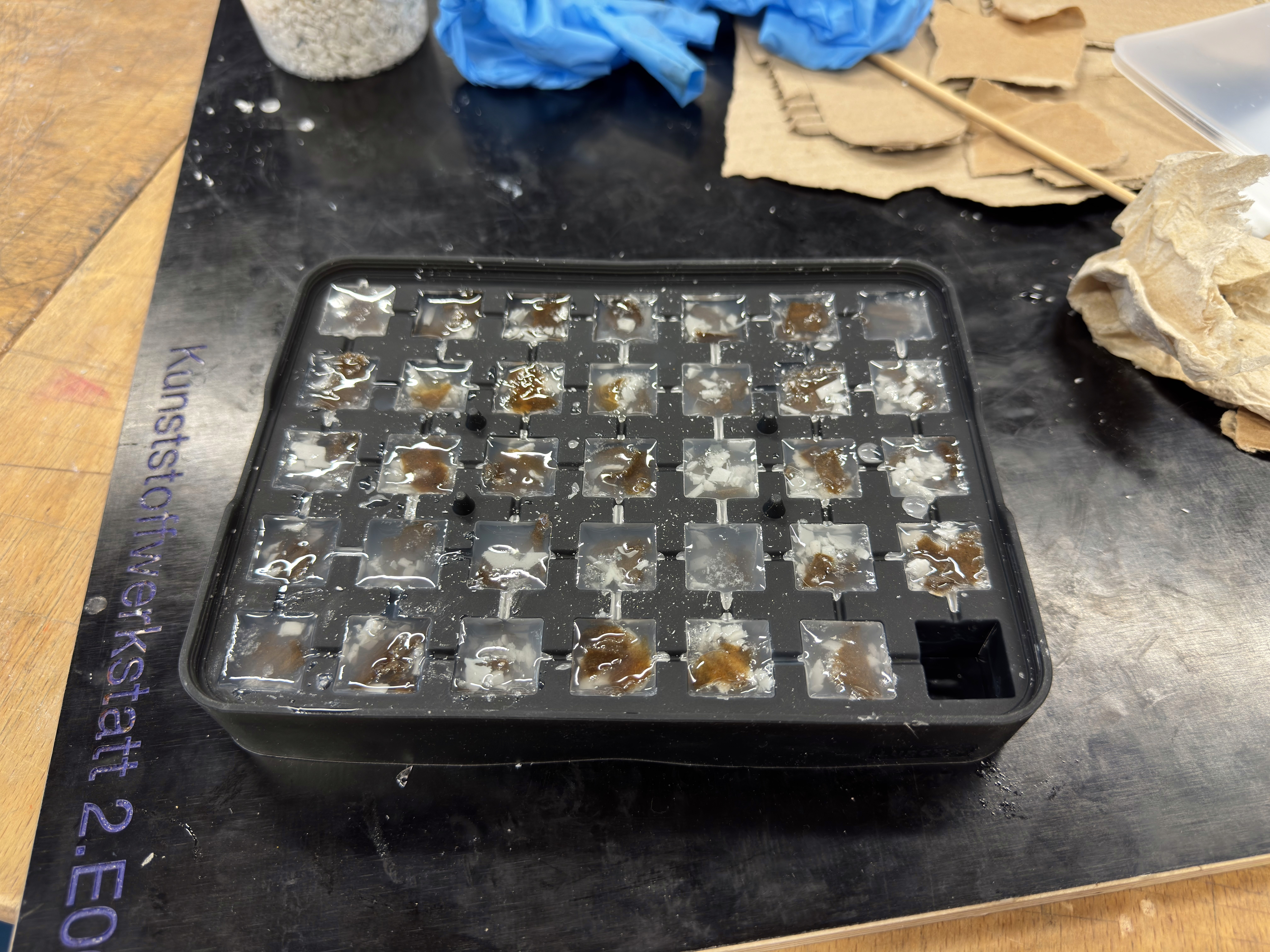
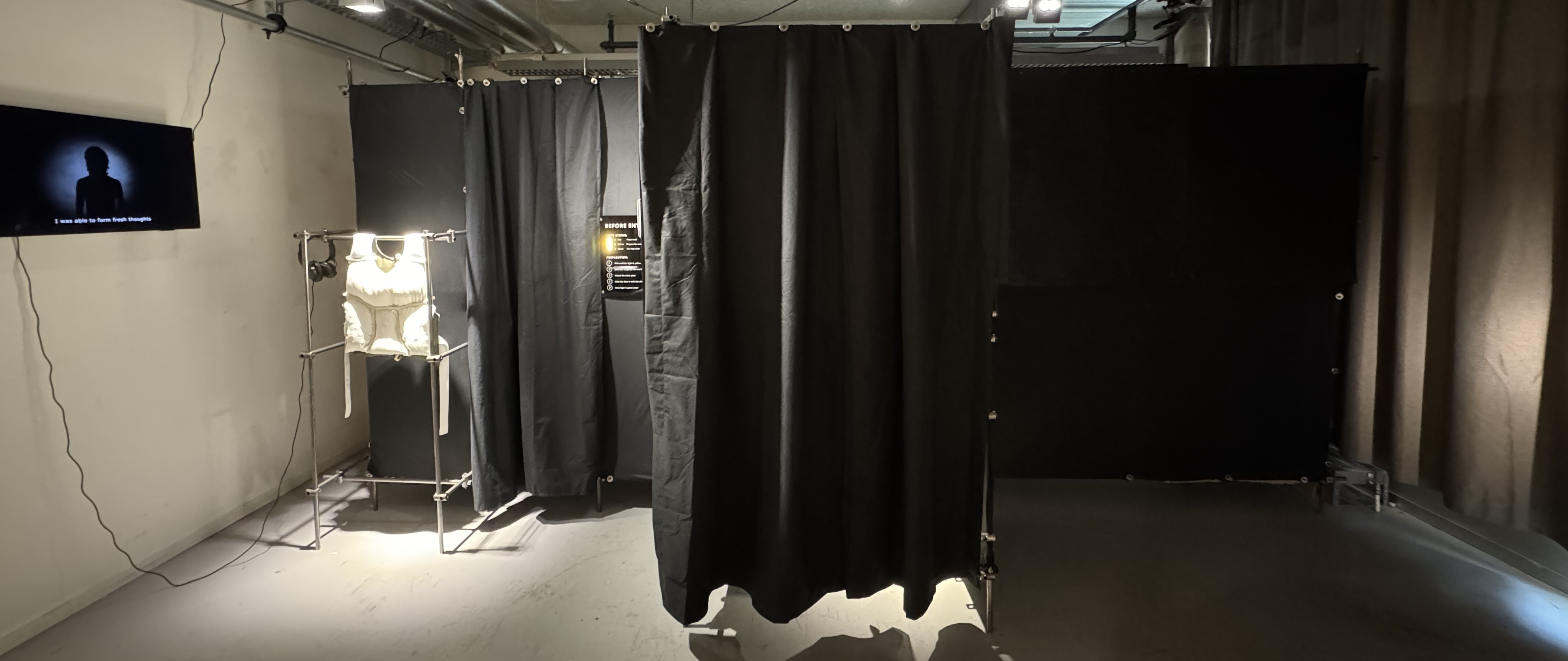
Building Process
Sliding door
Vest
Interior Design
Tunnel
Curtain Opener
Conveyor Belt
Navigation Clue
White was used consistently across key elements like the vest, doors, and cube to guide navigation intuitively
Interior as Metaphor
Each space’s interior design reflects a specific aspect of the eating disorder experience, addressing not the situation itself, but the feelings it brings
Embodiment
A weighted vest introduces a grounding, hug-like sensation from the very beginning, using physical weight to anchor visitors in the moment
Made by Hand
Every component was custom-designed and built by me to match the installation’s specific size and functional needs
Outcome
Design for Reflection
Instead of optimizing behavior, the installation helps users notice and question the emotions beneath their actions
Open-Ended
Like therapy, the installation only facilitates the first step, offering no clear instructions so each person can find their own answers
Building Empathy
For those without personal experience of eating disorders, the installation makes an invisible mental struggle physically felt, not just explained
·
Working so close to a 7-year personal experience with ED made objectivity hard, but interviews and testing taught me to balance instinct with outside perspectives.
·
Open-ended, embodied interaction lets people find their own answers rather than being told what to feel.
·
Sensitive topics demand safe conditions, but genuine reflection can’t be made completely free of discomfort.